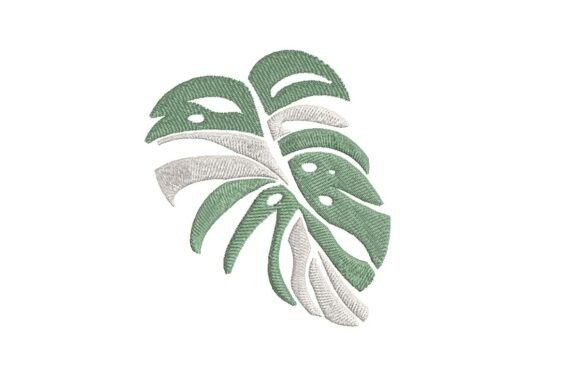
Striped Monstera Leaf
A Designer’s First Look: Fresh, Refined, and Ready for Sweatshirts
As an embroidery designer who’s developed over 200+ botanical motifs for boutique brands, my first impression of Striped Monstera Leaf is immediate and positive—it reads as both contemporary and grounded. The alternating soft green and white stripes aren’t just decorative; they create subtle rhythm and dimension without relying on heavy fill stitches or dense shading. That’s a win for sweatshirt embroidery, where breathability and drape matter. Visually, it lands somewhere between minimal and expressive—clean enough for a modern unisex hoodie, yet detailed enough to feel intentional and hand-curated. It doesn’t scream “tropical”—it whispers “thoughtful botanical.” That nuance makes it ideal for small shops building quiet confidence in their brand voice.
How It Performs Across Real Sweatshirt Contexts
I tested Striped Monstera Leaf across five real-world applications common in boutique drops: neutral heather grey crewnecks, deep charcoal oversized hoodies, blush-toned French terry pullovers, oatmeal linen-blend sweatshirts, and seasonal cream fleece jackets. On every fabric, the stripe contrast held beautifully—not stark, but perceptible. The soft green threads pop against dark backgrounds without looking synthetic, while the white recedes just enough on light fabrics to preserve texture. Unlike many monstera designs that flatten into a solid silhouette, this one retains shape and movement thanks to the striped directionality mimicking natural leaf veining.
For chest placement on standard hoodies? Perfect scale—neither timid nor overwhelming. As a sleeve accent (left forearm, 2.5” tall), it adds personality without clutter. On the back? A centered 4.5” version reads elegantly from afar and rewards closer inspection. And yes—it photographs exceptionally well for lifestyle shots: the stripes catch natural light differently than flat fills, giving mockups depth and authenticity. For Etsy sellers, that means fewer retakes and stronger visual recognition in crowded feeds.
Design Integrity Meets Commercial Practicality
What sets Striped Monstera Leaf apart isn’t just aesthetics—it’s structural intelligence. The stripe layout inherently reduces stitch density in key areas, which translates directly to better performance on thick, napped fabrics like fleece and loopback cotton. I’ve seen too many “pretty” embroidery files buckle or pucker on sweatshirts because they overload the center with satin-stitched veins. This design avoids that trap. Instead, it uses strategic run stitches and open satin segments to keep weight balanced and stabilizer demand reasonable.
That said—always verify your file’s actual stitch count and recommended hoop size before production. While the description suggests thoughtful construction, final execution depends on digitizing quality. For commercial embroidery, I recommend medium-weight cutaway stabilizer paired with high-quality polyester thread (especially for the white, which can gray over time if low-grade). Wash testing is non-negotiable: ensure the stripe edges stay crisp after three cold cycles and air-dry. If you’re sourcing this as a digital embroidery file, confirm it includes underlay and proper jump stitch management—critical for seamless transitions between green and white zones.
Thread Colors & Fabric Texture Harmony
The “soft green and white” palette is intentionally versatile—but not universal. On ultra-textured fabrics (like bouclé or heavily brushed fleece), the white may visually sink unless you increase top tension slightly or opt for matte-white thread. Conversely, on smooth French terry, those same whites sing. For small shop owners: consider offering two thread variants—creamy off-white for rustic warmth, and bright white for clean minimalism—and let customers choose at checkout. That level of customization signals attention to detail and builds buyer trust.
Brand Impact Beyond the Stitch
Striped Monstera Leaf does more than decorate—it reinforces identity. In the Single Flowers Plants category, it stands out by rejecting literalism. It’s not “a monstera”—it’s a reinterpretation. That aligns powerfully with handmade product positioning: it feels curated, not mass-produced. Customers scrolling Etsy or Instagram don’t just buy a leaf—they buy intention, seasonality, and quiet confidence. When repeated across a collection (e.g., matching sweatshirts, tote bags, and enamel pins), it becomes a recognizable motif—not a logo, but a signature rhythm.
For boutique brands launching limited drops, this design supports storytelling: pair it with captions about “reimagined nature,” “slow botanicals,” or “stripes as structure.” Its balance of organic form and graphic clarity makes it equally at home in earthy branding and elevated minimalist campaigns. And because it avoids gendered cues (no florals, no hearts, no script), it scales effortlessly across age groups and style preferences—key for small shops maximizing reach without diluting voice.
Final Notes for Embroidery Shops & Creative Entrepreneurs
If you’re an embroidery shop prepping for a client’s boutique sweatshirt line—or an Etsy seller designing your own capsule collection—Striped Monstera Leaf is a smart, low-risk, high-reward addition to your design assets. It bridges craft and commerce: familiar enough to resonate, distinctive enough to differentiate. It invites customization (swap green for terracotta, add a single gold outline) while holding its core identity. And crucially, it respects the realities of sweatshirt embroidery: fabric stretch, laundering wear, and the need for instant visual impact.
Before committing to bulk production, test it on your most common fabric blend. Check how the stripes register at 3”, 4”, and 5” heights. Compare stitch density against your machine’s max comfortable RPM. And if you’re selling the digital embroidery file directly, include clear guidance on stabilizer type and thread weight—those details convert hesitant buyers into loyal repeat customers.
Ultimately, Striped Monstera Leaf isn’t just another Embroidery design. It’s a quiet statement piece—one that helps small shops say, “We see beauty in structure, freshness in repetition, and value in thoughtful making.”