Rose Daffodil and Daisy Trio Embroidery
A Springtime Trio That Feels Like a Breath of Fresh Air
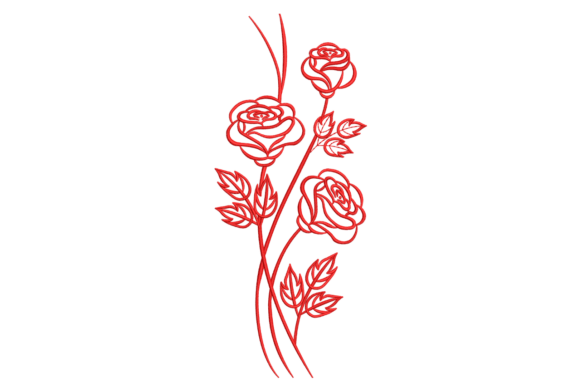
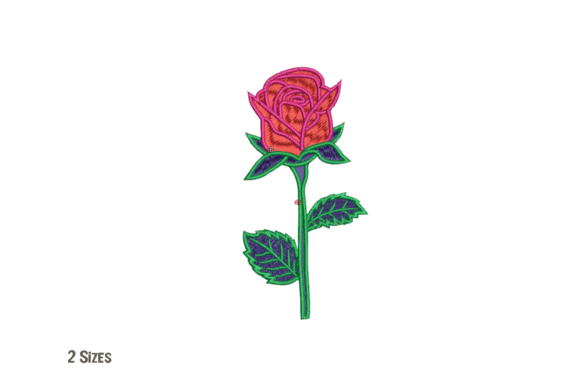
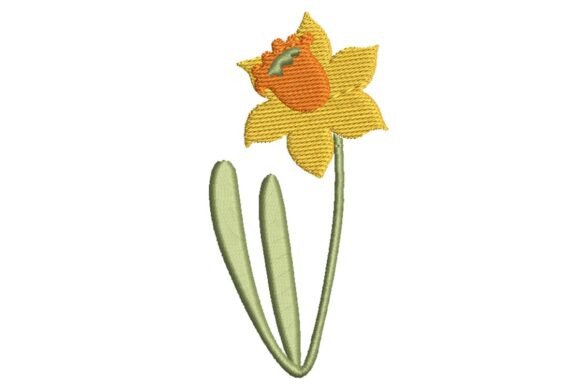
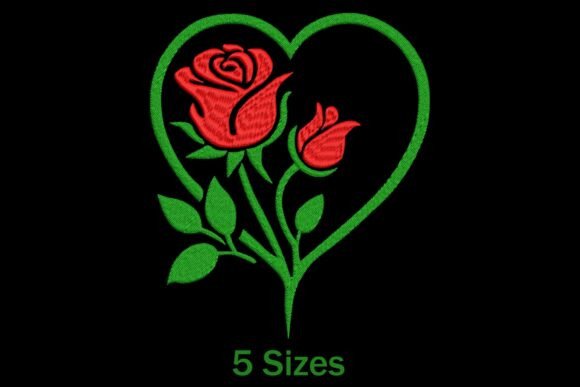
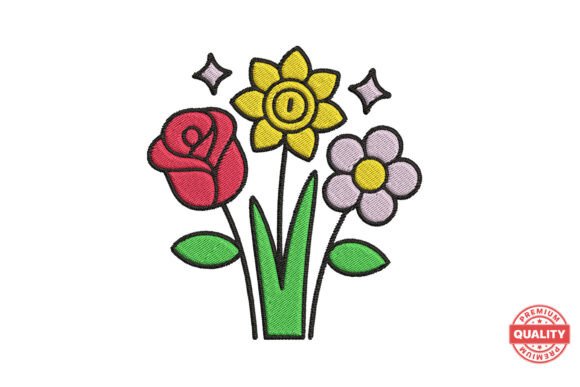
First impression? Light. Joyful. Uncomplicated—but not simple. The Rose Daffodil and Daisy Trio Embroidery lands with the quiet confidence of a well-composed garden sketch: three distinct blooms arranged with gentle asymmetry, each holding its own character without competing. It’s not fussy, not overly botanical, and avoids the stiff formality some floral machine embroidery designs fall into. As a designer who’s stitched hundreds of floral motifs for client apparel and boutique home goods, I immediately saw this as a workhorse—not a showpiece, but a reliable, emotionally resonant anchor for real projects.
Where This Design Truly Comes Alive
I recently tested the Rose Daffodil and Daisy Trio Embroidery on a set of organic cotton tea towels for a local kitchen boutique—and it sang. The 4.8-inch size (Size 2) landed perfectly centered on the lower corner, large enough to read at a glance but small enough to leave breathing room. On sweatshirts, the 5.8-inch version adds warmth without overwhelming the chest area; on baby onesies, the 3.8-inch size keeps proportions balanced and avoids bulk near delicate necklines. It’s also become my go-to for embroidered patches: clean petal edges hold up beautifully in satin stitch, and the open spacing between blooms prevents dense fill-stitch bleed when layered on twill or denim.
This isn’t just “pretty”—it reads as intentional. Customers notice that. A handmade tote bag featuring this trio sold faster than expected on Etsy last spring, with buyers specifically mentioning how “thoughtful” and “seasonally grounded” the design felt. That matters for craft businesses: when your handmade product carries emotional clarity, it builds trust faster than any listing description.
What to Watch For—Real Fabric & Stitching Realities
The Rose Daffodil and Daisy Trio Embroidery shines on stable, medium-weight fabrics like quilting cotton, canvas, and midweight knits—but tread thoughtfully on stretchy or thin substrates. On lightweight rayon or jersey, I recommend testing with tear-away + cut-away stabilizer combo and reducing top tension slightly. The daisy center and rose bud details rely on crisp running stitch outlines; too much fabric movement blurs those lines. Also, avoid placing it directly over seams or curved surfaces like cap crowns unless you’ve confirmed hoop clearance—those subtle stem curves can distort if hooped too tightly.
Dark fabrics? No problem—if your thread colors are chosen deliberately. I ran a test in ivory and soft sage on charcoal linen: the contrast was elegant, not stark. But skip ultra-fine black-on-black combos—the detail density doesn’t support it. And while the design works beautifully on holiday embroidery (think Easter baskets or Mother’s Day pillow covers), don’t force it onto heavily textured bouclé or shaggy fleece: the fill stitches won’t nest cleanly, and the joyful lightness gets muffled.
Design Integrity Meets Commercial Practicality
One thing stands out: this embroidery file feels built for longevity—not trend-chasing. It’s versatile enough for a nursery wall hanging, a bridal shower towel set, or a small shop’s seasonal apron line. That adaptability directly impacts product value: customers perceive consistent quality across categories, reinforcing brand cohesion even when you’re selling across multiple platforms (Etsy, craft fairs, wholesale). For digital product sellers, the five sizes—including three clearly labeled inch-based dimensions—make licensing and bundling intuitive. Just confirm whether your intended use falls under personal or commercial terms before listing finished items.
As an applique design, it holds promise too—the negative space between blooms invites creative fabric layering. But proceed with caution: the current layout assumes solid-fill execution. If you’re adapting it for raw-edge applique, reinforce stem connections and simplify inner daisy details to avoid fraying.
Practical Designer Notes Before You Stitch
- Always test first: Run the Rose Daffodil and Daisy Trio Embroidery on scrap fabric matching your final project’s weight and weave—even if you’ve used it before.
- Check contrast early: View your thread color palette against both light and dark mockups. What reads softly on cream may vanish on oatmeal.
- Review stitch density: Dense fill areas (like the rose center) benefit from reduced density on delicate fabrics—adjust only if your machine allows fine-tuned control.
- Hoop size matters: Confirm your hoop accommodates the outermost bloom edge comfortably—no cramped stems or clipped petals.
- Inspect small details: Zoom in on the daffodil trumpet and daisy centers in your embroidery software. Are running stitch outlines intact? Any stray jump stitches?
- Mock it black-and-white: Print a grayscale version to assess tonal balance—this reveals clarity issues no color preview catches.
- Stabilizer is non-negotiable: Use cut-away for knits, tear-away for wovens, and consider topping for napped fabrics like terry cloth.
- Licensing check: If you plan to sell finished products or resell the digital embroidery file, verify usage rights with the original source. Never assume.
Why This Trio Fits So Many Hands—and Why It Should Be in Yours
This isn’t just another Single Flowers Plants download. It’s a quietly confident design asset—one that elevates a basic sweatshirt into a personalized gift, turns a plain tea towel into a curated kitchen moment, and gives small shop owners a cohesive visual thread across spring collections. It balances charm with craftsmanship: no excessive embellishment, no visual noise, just three flowers that feel like they belong together—and belong on something you’ll proudly make, sell, or give.
If you’re selecting embroidery design assets for your craft business, your next Etsy launch, or even a thoughtful holiday embroidery project, the Rose Daffodil and Daisy Trio Embroidery earns its place—not because it’s flashy, but because it’s trustworthy. And in the world of handmade product creation, trust is the first stitch that holds everything together.