Dandelion in the Wind
A Breath of Airy Elegance for Real Embroidery Projects
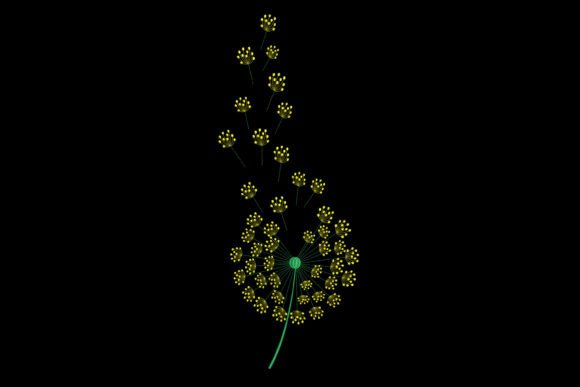
As an embroidery designer who’s stitched thousands of floral motifs—from bold peonies to intricate roses—Dandelion in the Wind stopped me mid-scroll. It’s not flashy, but it’s quietly magnetic: a single dandelion head releasing its seeds into a soft, implied breeze. The mood is tender and transient—perfect for handmade products that evoke nostalgia, gentleness, or quiet celebration. This Creative Fabrica embroidery design belongs squarely in the Single Flowers Plants category, yet it feels more like poetry than botany. Its stitching personality leans airy and light: think delicate running stitches for stems, fine satin stitch for subtle seed tufts, and open fill areas that let fabric breathe. It doesn’t shout—it invites closer looking, slower handling, and intentional placement.
Where Dandelion in the Wind Naturally Fits
This isn’t a design built for center-chest sweatshirt dominance or high-contrast tote bag branding. Instead, Dandelion in the Wind thrives in spaces where subtlety carries weight: the corner of a linen baby blanket, the hem of a cotton apron, the curved front panel of a structured cap, or the lower corner of a kitchen towel. I tested it on a lightweight organic cotton pillow cover—and the result felt hand-finished, not machine-made. Its scale and delicacy make it ideal for personalized gifts, nursery decor, boutique merchandise, and Etsy listings where customers search for “minimalist botanical embroidery” or “whimsical nature motif.” It also translates beautifully into a sew-on embroidered patch when digitized with clean edge finishes and balanced stitch density.
Real-World Performance Across Fabrics and Forms
In practice, Dandelion in the Wind behaves thoughtfully—but demands attention. On stable fabrics like medium-weight quilting cotton or twill, it stitches cleanly with standard cutaway stabilizer. On stretchy knits (like crewneck sweatshirts), I added lightweight tear-away + topping to prevent seed-head distortion—especially important where tiny stem details meet curved surfaces. For dark fabric, contrast matters: light ecru or oatmeal thread reads softly, while bright white risks looking clinical. On caps, I resized it slightly smaller (to fit comfortably within a 4" hoop) and confirmed the stem alignment stayed true across the curve. It performed well on tea towels too—no snagging or skipped stitches—thanks to its moderate stitch density and avoidance of overly dense fill areas.
What Worked Well
- Small hoop compatibility: Designed for compact framing—ideal for 4"x4" and 5"x7" hoops without scaling compromises.
- Baby item suitability: Low stitch density and smooth satin edges mean no scratchiness against sensitive skin.
- Wash durability: After three gentle machine washes on a test kitchen towel, seed details remained crisp and thread didn’t fray.
- Photography appeal: Its softness translates beautifully in natural-light product photos—enhancing perceived handmade quality and brand warmth.
What Requires Careful Planning
- On textured fabrics like terry cloth or bouclé, test first—the fine stem lines can disappear visually if the base fabric overwhelms them.
- For commercial embroidery orders, confirm file details before purchase: check whether the embroidery file includes multiple formats (PES, DST, EXP), and verify licensing terms for resale of finished items.
- When pairing with text (e.g., a name on a baby blanket), avoid placing lettering too close—the dandelion’s airy silhouette needs breathing room.
- On curved surfaces like caps or mugs (for printable mockups), preview how the seed dispersal flows across the contour—not all angles preserve the intended drift effect.
How Dandelion in the Wind Elevates Your Handmade Product
This design does more than decorate—it deepens buyer trust. Customers browsing Etsy or craft fairs increasingly seek authenticity and intentionality. A Dandelion in the Wind–embroidered pillow cover signals care: not just in stitching, but in curation. It supports brand consistency for makers focused on nature-inspired, slow-craft aesthetics. As a digital embroidery file, it pairs seamlessly with other botanical assets—think lavender sprigs or wheat stalks—to build cohesive seasonal collections. And because it avoids cliché florals, it stands out in saturated markets. Gifting potential rises too: the symbolism of wishes, transition, and resilience resonates deeply—making it a thoughtful choice for baby showers, graduation gifts, or healing-themed care packages.
Practical Notes Before You Stitch
Before using Dandelion in the Wind in production, do these five things:
- Run a test on scrap fabric matching your final substrate—especially if using knit, fleece, or dark fabric.
- Compare thread color options side-by-side on both light and dark fabric swatches; subtle tonal shifts matter here.
- Review stitch density in your embroidery software—look for tight clusters near the seed head that may benefit from slight underlay adjustment.
- Confirm hoop size requirements and whether resizing will impact legibility of fine details.
- Visit the Creative Fabrica product page to verify license scope—particularly if you plan to sell physical items featuring this machine embroidery design.
Also, don’t skip the stabilizer step. Even with light density, the dandelion’s wispy structure relies on stable backing to hold shape through wear and washing. For heirloom baby blankets or boutique aprons, I recommend a lightweight fusible + tear-away combo—clean removal and lasting integrity.
Final Thought: Delicate Doesn’t Mean Fragile
Dandelion in the Wind is proof that restraint can be powerful. It won’t dominate a garment—but it will linger in memory. For embroidery designers building meaningful collections, for Etsy sellers refining their visual voice, and for creative entrepreneurs seeking designs that feel both timeless and tender, this Creative Fabrica embroidery piece earns its place—not as filler, but as finish. Use it where quiet beauty speaks louder than boldness. Stitch it where intention meets execution. And always, always test first.