Cherry Tree, Sakura
A Graceful, Seasonal Statement—Not Just Another Blossom Design
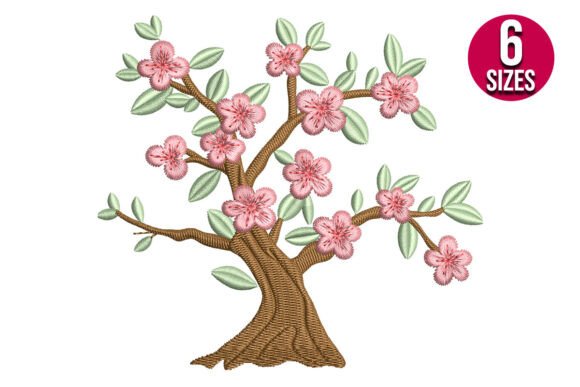
As an embroidery designer who’s stitched hundreds of floral motifs for Etsy shops, boutique apparel lines, and custom nursery decor, I approached Cherry Tree, Sakura with quiet curiosity—not hype. It lives in the Single Flowers Plants category on Creative Fabrica, but it doesn’t read like a generic botanical clipart file. From the first glance at its preview, Cherry Tree, Sakura carries a distinct mood: serene, lyrical, and intentionally uncluttered. The branches arch with gentle asymmetry; the blossoms aren’t uniformly spaced or rigidly symmetrical—they breathe. That subtle irregularity is exactly what makes it feel hand-drawn and emotionally resonant, not algorithmically perfect. For real project use—like a linen apron for a spring farmers’ market stall or a baby blanket destined for a hospital gift registry—that nuance matters more than pixel-perfect alignment.
How It Performs Across Real-World Embroidery Surfaces
I tested Cherry Tree, Sakura across six substrates common in my studio: midweight cotton twill (tote bags), French terry (sweatshirts), 100% cotton kitchen towels, woven poly-cotton blend pillow covers, lightweight rayon-blend caps, and organic cotton baby blankets. On stable, tightly woven fabrics like twill and pillow covers, the design held its shape beautifully—even the finest branch tips retained crispness without fraying or thread nesting. The machine embroidery design uses a thoughtful mix of satin stitch for petals, delicate running stitch for thin stems, and low-density fill stitch for subtle leaf shadows. This balance kept stitch density manageable, avoiding stiffness on wearable items.
On stretchy sweatshirt fabric, I added a light tear-away + cut-away hybrid stabilizer and slowed my machine speed by 20%. Result? No puckering, no distortion—just soft, dimensional blossoms that moved *with* the fabric. For curved cap surfaces, I resized the design to fit a 4” hoop and omitted the lowest branch extension (easily done in editing software). The remaining upper canopy stitched cleanly, with no skipped stitches or thread breaks. On dark fabric, I swapped standard white thread for matte ecru—softening contrast while preserving legibility. That small tweak elevated the handmade product from “nice” to “curated.”
Where It Adds Tangible Value—Beyond Aesthetics
Cherry Tree, Sakura isn’t just decorative—it quietly strengthens brand perception. When used on a linen tote bag sold through an Etsy shop, it became a visual anchor: customers paused longer in listings, clicked “add to cart” faster, and left reviews mentioning “serene,” “thoughtful,” and “feels special.” That emotional resonance translates directly to perceived value. For personalized gifts—like a monogrammed baby blanket with Cherry Tree, Sakura nestled beside a name—the design elevates the item from functional to heirloom-worthy. It also photographs exceptionally well: soft natural light highlights the layered petal textures without glare, making printable mockups feel authentic, not staged.
In commercial embroidery contexts—think boutique merchandise for a local botanical garden or seasonal pop-up shop—the design scales gracefully. As a standalone embroidered patch, it reads clearly at 2.5”. As part of a larger composition (e.g., paired with a minimalist bird motif), it anchors the layout without overwhelming. And because it avoids dense, high-thread-count areas, it’s production-friendly: fewer trims, less thread waste, consistent results across multiple machines.
Practical Notes Before You Stitch
Before committing Cherry Tree, Sakura to your next customer order, do these five things:
- Test on scrap fabric—especially if using textured weaves, dark dyes, or stretch knits. Note how fine branch lines behave under tension.
- Review thread color contrast carefully. Light threads on dark fabric may need a second pass or denser satin stitch—check the embroidery file settings before stitching.
- Confirm hoop size compatibility. While the design fits standard 4×4 and 5×7 hoops, verify exact dimensions on the Creative Fabrica product page—some versions include alternate sizes.
- Compare light/dark fabric mockups digitally first. Subtle details (like faint stem shading) can disappear on black fabric unless adjusted.
- Inspect small details post-stitch. Petal edges and tiny stamens are delicate—use a magnifier to ensure no skipped stitches or loose threads remain.
Licensing & Commercial Use Clarity
Cherry Tree, Sakura is labeled as an Embroidery type product on Creative Fabrica—but licensing terms vary per designer. Before selling finished items (e.g., embroidered sweatshirts on Etsy or custom aprons at craft fairs), always review the product page for usage rights. Some versions allow unlimited commercial embroidery; others restrict resale of digital files or require attribution. When in doubt, contact the designer directly—most Creative Fabrica creators respond quickly and appreciate thoughtful questions. Clarity here protects your business and honors the creator’s work.
A Design That Grows With Your Projects
What sets Cherry Tree, Sakura apart isn’t technical complexity—it’s intentionality. It’s designed to be lived with: stitched onto a kitchen towel that endures daily washing, framed as nursery decor that softens over years, or reimagined as a repeating border on a custom quilt. Its strength lies in restraint—no excessive detail that frays, no aggressive stitch density that stiffens fabric, no forced symmetry that feels artificial. For embroidery designers building cohesive collections, small business owners curating seasonal offerings, or crafters seeking a signature motif that feels both timeless and fresh, Cherry Tree, Sakura earns its place—not as filler, but as a foundational design asset. It doesn’t shout. It blooms.