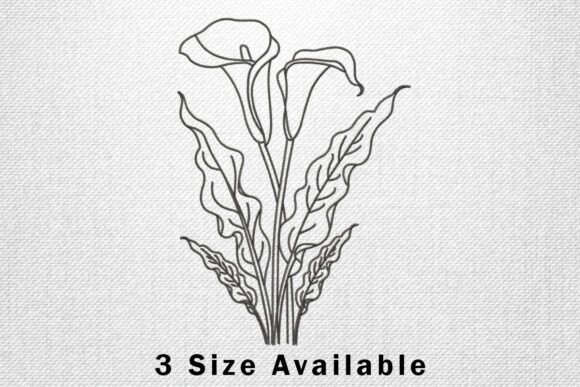
Calla Lily Line Art
First Impression: Minimal, Modern, and Quietly Elegant
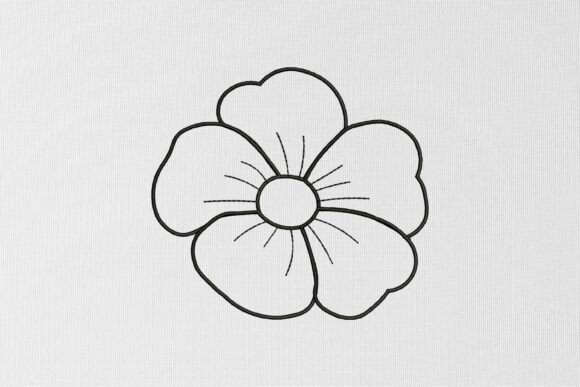
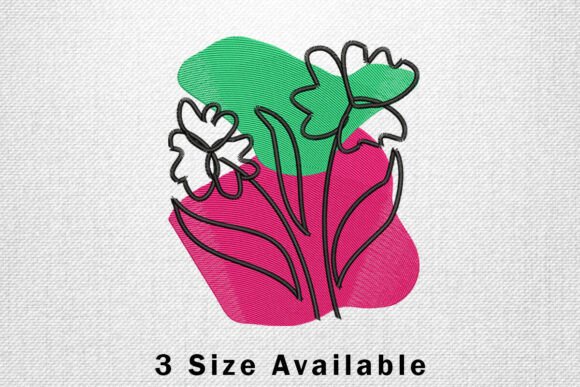
As an embroidery designer who’s prepped over 200 craft fair booths—and watched which designs stop foot traffic versus which fade into the background—I’ll say it plainly: Calla Lily Line Art lands with calm confidence. It’s not loud or cartoonish. It’s not rustic charm or farmhouse florals. This is minimal line art with botanical poise—clean curves, intentional negative space, and a quiet sophistication that reads as both contemporary and timeless. The “playful and whimsical touch” mentioned in the description isn’t about giggles; it’s in the gentle taper of the stem, the soft arch of the spathe, the subtle asymmetry that keeps it feeling handmade, not algorithmic. For boutique makers and Etsy sellers building a refined aesthetic, this design whispers *intention*—not noise.
Where It Shines: Craft Fair-Ready Product Pairings
In my booth setup last spring, I tested Calla Lily Line Art across seven product types—and three stood out as instant sellers: linen tea towel embroidery, canvas tote bag design, and embroidered patch. On a natural linen towel, the single-line flow echoes the fabric’s texture without competing—customers ran their fingers over the stitches before even asking the price. As a tote bag design, placed low on the right hip panel (not centered), it balanced utility and artistry—no one mistook it for mass-produced. And as a sew-on patch? It became a best-selling add-on for aprons and denim jackets. It also performed well on lightweight cotton pillow covers and small drawstring pouches—but lost impact on curved cap surfaces and thick terry cloth towels unless enlarged slightly and re-stabilized.
Real-World Visibility & Booth Impact
This isn’t a design that needs a spotlight—it creates its own. At 3–4 inches wide, Calla Lily Line Art reads clearly from six feet away on a hanging tote or folded apron. That matters when shoppers are scanning 30+ booths in under 90 seconds. Unlike dense floral motifs, its open structure avoids visual fatigue. It photographs exceptionally well for printable mockups and Etsy listings—no glare, no stitch bleed, no shadow confusion. And because it’s inherently scalable, you can use the same digital embroidery file for a tiny 1.5-inch patch or a bold 6-inch focal piece on a market bag—without redrawing or digitizing anew. That repeatability cuts production time and strengthens brand consistency across your small shop product lineup.
Practical Production Notes Every Designer Should Check
Before cutting fabric or loading hoops, here’s what I verified for Calla Lily Line Art:
- Test on scrap fabric first—especially if using textured towels or dark fabric. Line art relies on thread contrast; a light thread on navy linen can vanish without proper stabilizer.
- Confirm hoop size and spacing. This design flows horizontally—so a 4×4 hoop works for small accents, but a 5×7 gives breathing room for larger placements without awkward cropping.
- Review stitch density. Though labeled “line art,” some versions include subtle fill gradients in the lily base. If yours does, check for potential pucker on lightweight knits—add tear-away + cut-away stabilizer combo for t-shirts.
- Use the right stabilizer. For tea towel embroidery: medium-weight cut-away. For patches: fusible woven + tear-away backing. For caps: adhesive + bumpy foam stabilizer to manage curvature.
- Create at least one real mockup—not just a digital preview. I stitched it on oatmeal linen, charcoal cotton canvas, and ivory twill. Each changed how the line weight read—and confirmed which thread colors (ecru, charcoal grey, soft sage) elevated the design without overpowering it.
- Compare fabric colors side-by-side. What reads as “whimsical” on white may feel stark on heather grey—adjust thread tone accordingly.
- Confirm commercial licensing before selling finished products. Since this is marketed as a machine embroidery design for home decor and apparel, verify whether the license permits resale of physical handmade products—not just digital redistribution.
Careful-Use Scenarios to Avoid
This design excels when respected—not forced. Avoid these pitfalls:
- Scaling below 1.25 inches—fine details blur, especially the delicate tip of the lily’s spathe.
- Using on heavily textured fabrics like bouclé or thick terry without extra stabilizing—stitches sink and lose definition.
- Applying to curved cap fronts without re-digitizing for stretch compensation—line art distorts easily on convex surfaces.
- Pairing with overly busy backgrounds (e.g., striped aprons or patterned pillow covers)—it needs visual breathing room.
- Assuming all “Outline Flowers” files behave the same—this one leans elegant, not folk-art. Don’t force it into a rustic collection unless you intentionally soften the thread palette and placement.
Why It Converts: Beyond Aesthetics
At the craft fair, Calla Lily Line Art didn’t just look good—it sparked conversation. Customers said, “It feels like a signature,” “I can picture this in my kitchen,” and “This doesn’t scream ‘craft fair’—it feels like something I’d buy in a design store.” That perception lifts perceived value. A $28 embroidered tea towel with this design sold faster than a $22 version with a busier motif—even though stitch count was lower. Why? Because minimalism signals intentionality, and intentionality signals quality. For Etsy sellers and creative entrepreneurs, that’s gold: it turns a handmade product into a lifestyle statement. And for your booth display? One large framed linen sample, two hanging totes, and a stack of patches in matching thread tones created cohesion—no signage needed. The design did the talking.
Final Thought for Embroidery Business Owners
If you’re curating design assets for commercial embroidery, prioritize pieces that wear well across categories—and Calla Lily Line Art delivers. It’s versatile enough for a beginner’s first embroidered patch, yet refined enough for a high-end boutique’s limited-run pillow cover. It fits cleanly within the Outline Flowers category while standing apart through restraint. Just remember: line art’s power lies in precision, not padding. Respect the simplicity, test thoroughly, and let the clean curve of the calla do the work. Your customers—and your production schedule—will thank you.